Friday, March 28, 2014

Dirty Harry, James Bond, and Travis Bickle

My favorite scenes of Martin Scorcese's 1976 film, Taxi Driver, feature Travis shortly after deciding to take action against the "scum" of New York City. His exercise routine, his homemade holsters, and his quick-draw practice are all fascinating to me. I'll stick with the best of these scenes, when Travis buys guns from the illegal arms and substances dealer Easy Andy. It's my favorite scene for two simple reasons. I like Easy Andy's voice and I think describing guns or describing things as if they were guns sounds really cool.
The scene has some moments that could be analyzed for hours... Travis aiming his new gun at people on the streets below, the idea of Travis consulting an arms and drug dealer to take out arms and drug dealers, Andy and Iris sharing the same nickname, etc. But I thought it would be more fun to examine each of the guns he bought individually and see how they tie into his more subtle personality traits. Obviously he makes his own sleeve holster out of a drawer slide and adds a boot-sheathed knife to his arsenal later, but this is the scene where he arms himself with enough lethal weaponry to take down, say, a small group of pimps and gangsters.

Anyone will tell you that some of the things Easy Andy says is inaccurate and that it is out of character for military veteran Travis Bickle to not notice when he's wrong. I am trying to analyze the filmmaker's intent and am therefore taking the movie's words as fact for now, even if it isn't always true.

.44 Magnum: $390 ($350 for the gun and $40 for the handmade holster). Easy Andy's description: "Stop a car at 100 yards, put a round right through the engine block... That's a beauty. I could sell this gun to some jungle bunny in Harlem for 500 bucks. But I take care to sell high-quality goods to the right people... This might be a little too big for practical purposes... the Magnum, you use that in Africa for killing elephants."

Travis pays the most for this hand cannon, and it is the most powerful of any of his new weapons. Easy Andy claims it can shoot through a car engine and kill elephants. Travis takes this because he feels he has a huge problem ahead that he needs heavy ordinance to confront. The gun is nearly impossible to conceal, especially without a holster. Travis takes it anyway because subtlety is not his goal. As his "We ARE the people" pin and mohawk later demonstrate, Travis is trying to make statement visually as well as through his actions. He would want people to see him as a figure of power.

The .44 Magnum is also the signature weapon of Dirty Harry, the murderous homicide detective from the eponymous 1971 film. Dirty Harry Callahan made the weapon famous for being "the most powerful handgun in the world" (at that time) and for using it kill criminals harshly and without mercy. Like Dirty Harry, Travis is trying to rid New York City (well, Dirty Harry was in San Francisco, but it's a big city, too) of the street crime, thugs, drug dealers, pimps, killers, etc. Revolvers were already a signature of Dirty Harry's star, Clint Eastwood, as he famously portrayed outlaws, lawmen, and several other "cowboy" roles in many Westerns. Travis sees himself as a Clint Eastwood character. His past is irreconcilable, he's gone so long without killing, but circumstances are dire and the city needs and outlaw to clean up the streets by putting bodies in the ground. The .44 caliber is iconic for its lethality and danger.

The camera shows the gun slowly, which I could analyze like Freud all day long. But let's move on.

.38 snub-nose: $250. Easy Andy's description: "Look at this. That's a beautiful little gun. It's nickel-plated, snub-nose, otherwise the same as a service revolver. It'll stop anything that moves. That .38, that's a fine gun. Some of these guns are like toys. That .38, you go out and hammer nails with her all day, come back and it'll cut dead center on target every time. It's got a really nice action to it. Heck of a wallop."

This is a glamorous gun, nickel-plating being the spinning rims of the gun world. Since it's akin to a service revolver (a revolver issued to the armed forces in the military), Travis is already familiar with it, which is why it is the weapon he chooses to put in his homemade sleeve holster for instant access and the only gun he aims at civilians while with Easy Andy. Yet another revolver, Travis's second favorite gun can also be seen as an extension of the cowboy persona he feels he has. As any first person shooter gamer will tell you, the snub nose sacrifices accuracy for easier concealment. While the .44 caliber is known for its power, the .38 is a more "standard" caliber of weapon, since it balances the power of a higher caliber with the discretion of, say, a .357 or something smaller.

To further emphasize my belief that Travis sees himself as the classic American heroic archetype, the cowboy, he practices quick-drawing his revolvers. The Western genre's most iconic cliche is the gun duel, wherein whoever is quicker on the draw is the one who lives to see another day.

Colt .25 automatic: $125. Easy Andy's description: "It's a nice little gun. It's a beautiful little gun. Holds six shots in the clip. One in the chamber. If you're dumb enough to put a round in the chamber."

I don't know much about this gun and could not find much about it. It's not a revolver, but it's still a six-shooter. I'm starting to get the sense that even though Travis Bickle put himself through a strict exercise and diet routine, all the while practicing his one-liners ("You talkin' to me?") and quick-draws and making new holsters, he is too shortsighted to get accustomed to firing guns with large magazines.

380 Walther: $150. Easy Andy's description: "Holds eight shots in the clip. That's a nice gun. Yeah, that's a beautiful little gun, look at that. During World War II, they used this gun to replace the P-38. Just given out to officers."

Oh, eight shots this time. Shows what I know. Anyway, this gun was reserved for officers originally. This and the aforementioned service revolver are symbolic of Travis taking the law into his own hands figuratively by taking law-enforcement weapons into his own hands literally.

The Walther is the signature weapon of James Bond, another iconic character who was licensed to kill. Travis believes he too is above the law, and that his actions will save American society, just as Bond's killing sprees save his country.


What is a jungle bunny?

Tuesday, February 25, 2014

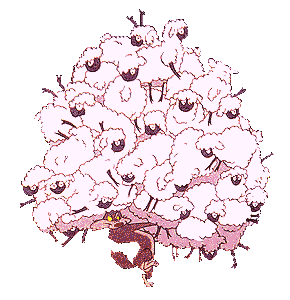
What was up with that dog mask?

The dog mask spooked me. That's why I decided to talk about it. I couldn't upload it, but here is a link to the scene: http://www.tcm.com/mediaroom/video/248007/Killer-of-Sheep-Movie-Cilp-I-Wonder.html

The context of the scene is important. It is one of the many scenes in the 1977 (or 1979, or 2007, depending on your sources and criteria) Charles Burnett film, Killer of Sheep, that sees the protagonist, Stan, repairing his sink. His seemingly fruitless attempts at fixing a vital appliance in his home is very likely symbolic of his misguided effort to raise his children to be like him, which does not solve any of the family's core problems. The scene also follows one wherein Stan watched two people steal a television. Though he didn't let them go without a warning of being caught, he himself did nothing to try and stop them. This is because he always focuses more on his own family as the most important thing to worry about, even though it's allowing others to fall victim to the very circumstances he is trying to shield his family from.

After his friends asks if he's going to kill himself, Stan says he won't. His unwillingness to accept his poor financial standing and general downtrodden lifestyle is one of his admirable traits, though his stubbornness is also a curse, as it keeps him from being sympathetic towards others, even his children. When his kid arrives wearing a spooktacular dog mask, he jokes that he might kill him. He symbolically herds his children to their doom like the sheep in a slaughterhouse anyways, so his figurative consideration of killing them seems eerily in character.

While joking about murdering your children is a bit of a red flag in most cases to begin with, it is worse in this context because the child can see and hear him. Stan doesn't care whether his children understand why he says things or how they feel. The only reason he jokingly threatened to murder the kid is because she startled him, and he didn't even flinched, unlike I still do every time I watch that scene.

If anyone thinks they know why it was a dog mask specifically or why it was frightening, please let me know in a comment.

Sheepdog couldn't help from entering my mind.

Friday, February 21, 2014

I Liked Cicadas Before We Watched the Scene in Class.

Put on your fake glasses and step into my time machine. Let's go back to February 20th, 2014, 12:30p.m. Film as a Narrative Art Class. When we started discussing Two-Lane Blacktop, one of the most important scenes we discussed was the conversation about cicadas that occurred 31:23 into the movie. This upset me, as it likely meant that many people were going to discuss this scene in their blogs and mine would stand out less. You see, I wanted to talk about this scene before we were informed it was important, as I felt it was one of two scenes that should be discussed the most, the other being the ending, as these scenes were the only ones that didn't just hold my attention, but fascinated me.
If anyone is still uncertain as to the whether the 1971 Monte Hellman-directed road film was intentionally subersive of expected and well-loved road movie elements, the tagline on the movie's poster should remove all doubt. They have no goal, because "their world is a two-lane blacktop." The movie doesn't have an ending, because their world has "no end." How can it if it has "no beginning"? The film repeatedly does the opposite of everything expected of it.

Two-Lane Blacktop even subverts expectations one might have of it after understanding its attempts at subverting expectations. Instead of long, musical, wide panning shots, there are tight, noisy, almost boring shots from inside of the car, yes, but all of that works towards creating a sense of calmness, the hidden gem that is peace in being aimless. But then, near the end of the first act, the Driver tries to talk to the Girl about cicadas of all things.

"From left: Dennis Wilson, Laurie Bird, and James Taylor." So yes, I'm fairly certain it was the Driver talking in the cicada scene, for those of you who couldn't tell them apart (like I needed two views of the movie to do). He's wearing the same shirt in this picture as in the cicada scene.

The near constant noise in this scene is from cicadas, some of the loudest animals on the planet.
 For most of the movie, the cars are making constant noise. When the Driver asks if the Girl hears the cicadas, a car drives by in the background. The Driver is impressed with the critters' resilience, as they can survive for seven years underground, only surfacing to breed and then die. The cicada must crawl out of its skin first. This is a parallel to the road trippers' tendency to stay in their car, avoiding any responsibilities or goals in life until the Girl comes along, inspiring them with the mercilessly brief goal of sex. They must first stop and exit their car first, just as the cicada sheds its skin.

In other words...

=
The Driver is a man with no purpose trying to exit his comfort zone, talk to a woman, and have sex with her. Cicadas are bugs who spend years with no purpose before exiting their skin to try to have sex. Two-Lane Blacktop considers road trippers nothing more than people who have no real purpose outside of petty, temporary goals. The eyes of a cicada are bright like the headlights on a car, if you wanna get really into it.


Saturday, February 8, 2014

Easy Rider: Meaning of "We blew it."

"We blew it," says Captain America in response to Billy's declaration of their trip to Mardis Gras as a success.

I did some research and it turns out that not only was the explanation of this line removed from the film, but Peter Fonda and Terry Southern both always refused to even offer clues as to its meaning. This indicates that the line is open ended, up for interpretation. While some may argue that the fact that the line is meant to be enigmatic defeats the purpose of analyzing it, I say that even more meaning can be gleaned from it.

Of all the potential meanings I researched, the following is the one I believe is most likely the correct meaning.

Captain America and Billy had failed a spiritual quest. Along their journey they encounter hospitable people who pray before dinner and remind them of proper manners (such as the rancher's family). Captain America remarks more than once on how impressed he is by the life they built there.

Later, on Sacred Mountain, a hitchhiker they picked up from a Sacred gas station chastises Billy for being disrespectful to their camping grounds. At the hippie commune, which is filled with playing, happy, laughing children, another prayer is held. Here they are invited to stay.

In spite of all the positive spirituality they encounter on the way, they trip on acid, pay prostitutes, and have a very unpleasant time as religious imagery flashes on the screen (meant to represent what they see during their bad trip).

Captain America is on a quest to find meaning, but every time he encounters evidence that there is something more to life than a gas tank full of drug money, he ignores it. He only realizes his mistake when it's too late, and is punished by fate with death for his failure to accept the offer

It is worth noting that the support for this potential meaning of the line, "We blew it," came in the form of evidence presented in an argument that this is a more conservative money than liberal. The spirituality is presented as a positive alternative, and family togetherness is presented in the rancher's house and the hippie commune, the rancher's house even having some traditional manners.

Friday, January 31, 2014

Thelma and Louise is Feminist.

Thelma and Louise is feminist, but it fails to properly portray feminism.

I do not pretend to fully understand feminism. There are warring factions within the group and tons of different opinions on it from groups outside. Blah blah blah.

I don't recall who said it, but someone in class mentioned that Thelma and Louise was only "second hand" feminism. While I can't know what this person truly meant, I interpret it the following way.

Thelma and Louise is trying to show feminism, it tries to show women taking a stand against a patriarchal culture, but it can never succeed in doing so. Not just because of its failings as a movie, but on a fundamental level, as it was partially produced and entirely directed by men. Men can be sympathetic to women and promote feminism all they want, but they can never understand what being a women is like, and could never perfectly explain the female experience. While any other attempt at portraying something people are invested in on screen could be forgiven for human mistakes, such an important issue that is so meaningful to HALF of the humans deserves at least a more accurate representation of their ideals. Especially if that representation is going to be one of if not the most popular ones in the next few decades.

So, I feel like Thelma and Louise fails at truly showing feminism. Thelma and Louise become careless and violent, making bad decision after bad decision as they supposedly become more and more independent. It is not a good sign that some people felt like it was trying to show what women are like without men, instead of what women could be like with overly patriarchal men.

However, while all that may make it a mediocre or poor example of feminism, it is still feminist. It is showing women being empowered not by their hatred of men, but by their refusal to accept oppression. And it doesn't become sexism (reverse sexism, feminazism, call it what you will), as it makes a point to show that they don't refuse to be oppressed just because they are women and they believe they are deserving or superior because of it.

No, Thelma and Louise are feminist icons because they take what they deserve as human beings. They go to far, yes, and one could argue in some Malcolm X-ian way that they had no choice, but the fact of the matter is that they were sick of being disregarded and they did something about it.

They tried and failed, just as this movie tried and failed to properly portray feminism. But it tried. And I doubt the few people who like women even less after seeing this outweigh the good this movie did by getting people taking. Second hand feminism is good enough for this male.

Friday, January 24, 2014

Ideology in Sin Nombre.

Rant ahead: Skip the first 3 paragraphs to get right to the insight!
I will be discussing the idealogies present in my LEAST favorite scene of Sin Nombre. The scene begins at the early 8:25 mark of the movie. Willy shows up in Martha's bedroom. She slaps him, he gives her flowers as a gift, and they have sex.

I remember when our fearless leader said he wasn't a big fan of Sin Nombre because it was too Hollywood. While I can't deny the cheesy pacing of some of the dialogue, the godawful ending, and other blatant tropes, I never truly got the impression that the movie's Hollywood-ness was interfering with it's ability to tell a story. Except for this moment. I hate this moment of the movie so much that I dreaded the rest of the movie and find it difficult to intelligently analyze... but I shall. The obvious question is, "Why discuss the ideology of a scene you don't like?" That's because this scene represents ideology. Not the ideologies of the immigrants, or of gangs, or of the nation's people, but of movie audiences and movie makers.

I own hundreds of movies and have seen hundreds more. I like having movies on in the background of my life while I do homework, read, play a game with friends, eat, etc. I see a lot of movies. As any rabid movie fan knows, there are certain cliches that bother people more than they seem to bother many others. You know what annoys me the most? The portrayal of women in romantic contexts. For example, women in movies like being stalked way more than women in real life. A famous recent example is Twilight, but I'm just referring to the bottom of the barrel. Les Miserables is guilty of this, too. What cinematic sin does Sin Nombre commit? Martha slaps Willy and then immediately has sex with him after he offers her flowers.

No one likes flowers that much. She had just woken up when the scene started, so what happened was drastic enough to make her angry enough to slap Willy's face upon sight after she had a night to calm down by sleeping. This anger implies some deeply personal and dramatic tension between them. But then she's having sex with him seconds later. I can ignore the cheesiness of their passion superseding the fact that Martha just woke up (am I right, ladies?), but no excuse is given as to how a gesture as simple as flowers reminds her of why she not only loves Willy, but is so sexually attracted to him that she can not even withhold sex to remind him that he wronged her and should try to make it up to her with more than flowers. I can only assume that she was mad at him for not bringing her flowers. Yes, I know that the gesture of bringing flowers and the refusal to leave or even protest upon being slapped implies that he understands his folly, is apologetic, and will not do it again, but that should even out her emotions to neutrality at best, not make her horny enough to have sex, rewarding him for the basic decency that the scene clearly demonstrates he should have been showing all along.

So what ideology does this represent? Emotional simplicity is something many audiences value in their entertainment, especially something that can be as passive as watching a movie. It's why classic fairy tale movies remain iconic in spite of their valid criticisms for having the princesses marry men they barely know. Seeing love is emotionally satisfying. Seeing sex is emotionally satisfying. Seeing even the basest form of conflict resolution is inherently satisfying as it offers audiences closure. Were the filmmakers trying to demostrate that? Certainly not. They were establishing the relationship between the two characters utlizing ideologies that the writer shares with the audiences and all audiences.

...

The rest of the movie was pretty good, though.

Sunday, January 19, 2014

Sin Nombre: Smiley's initiation.

An early scene in Sin Nombre depicts the initiation of the boy, Smiley, into the Mara Salvatrucha gang. This is my favorite scene in the movie (though my favorite moment is still the satisfying machete-to-the-neck scene that Casper inflicts on Mago about 40 minutes in), and while I do admit that many of the reasons it is a good scene are obvious, I do feel like certain elements of it that appealed to me may have gone unnoticed by other viewers.

First, the points everyone knows about. The scene where he kills the gangster is representative of Smiley's loss of innocence. The scene where Smiley is being beaten up by the gang members in an attempt to prove his toughness is clearly showing the desperation of children of the area to join the gangs to distance themselves to the gang's violence on civilians, surround themselves with people who will protect them from the other gangs in the area, and to seem cool. Smiley's proud grin after he endures his beating and the scene later in the movie where he shows off his gun to younger boys prove that kids there think gangs are cool, likely because they get away with doing whatever they want thanks to their brutality and intimidation.

Smiley's initiation doesn't end with his merciless punching, though. Soon after, Mago brings him out to a captured rival gang member. I'm, like, 60% sure he was in the Chavala gang before he quit, as he professes he did. There may have been some consonants rearranged. Maybe an r I'm leaving out. I digress. With a makeshift pipe gun (easily one of the most interesting improvised weapons I've seen outside of the action genre), Willy/Casper guides Smiley's hands and they murder the captured gang member on the assertion by Mago that someone who was once a Chavala will always be a Chavala. Smiley's reluctance indicates that he wishes he didn't have to do it, because he feels like he has to, both out of fear of what Mago will do to him and desperation to join the gang. Even Casper doesn't seem happy about it, and this comes into play later when he gives Mago his resignation from the Mara Salvatrucha gang in the form of a machete to the neck. Sorry, But I like that scene a lot.

On to the aspects of Smiley's initiation that I felt some may have overlooked. The symbolism I noticed has nothing to do with Smiley's actions, Casper's, or Mago's. The ex-Chavala they executed is what stuck with me the most. He begged them not to kill him on the grounds that he was no longer a Chavala. But, as Mago said, "Once a Chavala, always a Chavala." And so he had to die. One gangster who regretted his decision to join a gang died so that another gangster could be born. In the figurative sense that he just became a gangster of course. But it isn't just the meaningful eye contact Smiley makes with the ex-gangster before the kill. This concept entered my mind. If the gangster wasn't an ex-Chavala, but an ex-Mara Salvatrucha member, the scene would be a moment from Looper. For those who don't get that reference, what I mean is that the ex-Chavala represents what Smiley would become if he stayed in the gang. Smiley can never completely escape his fate at the end of a gun if he submits to the will of the violent overlords of the area. He isn't just crying because an apparently innocent man is going to die; he's also crying because he is going to die just like that man, even after he tries to put that life behind him. It is a permanent, irreversible decision that means the difference between dying any day of his life or dying after he tries to settle down with a family.

...Or at least it WOULD have meant all that if the ending wasn't so dang positive... bittersweet at worst.

Speaking purely from the standpoint of an audience member, I feel like they should have put the ex-gangster's execution in the frame. Seeing the gore would have grossed out anyone less desensitized than me and driven home the point that these gangs are a horrible blister on the planet.